Ever planned a weekend picnic and checked the weather app, only to feel fooled when plans fall apart? That same feeling shows up in business and finance. You might build a staffing plan on next week’s forecast, or invest based on the next five years.
The difference comes down to short-term vs long-term forecasts. Short-term forecasts predict the near future, usually hours to weeks (sometimes up to about 90 days). Long-term forecasts look months to years ahead. They help you steer big decisions, even when the details are foggy.
Knowing the difference matters because each forecast type comes with its own strengths and limits. In weather, it’s the difference between “what’s happening tomorrow” and “how the season may feel.” In business, it’s the gap between day-to-day demand and market direction. In finance and economics, it’s the contrast between monthly cash flow and long-run growth.
This guide breaks down time horizons, accuracy patterns, the data and tools behind each approach, and real-world examples across key fields. By the end, you’ll know when to trust short-term signals, when to lean on long-term trends, and how to use both without getting misled.
How Time Horizons Set Short-Term and Long-Term Forecasts Apart
The simplest way to tell the difference is by the clock. Time horizon drives everything, from what data matters to how much confidence you should have.
Here’s the core idea:
- Short-term forecasts cover the near future, often hours to about 1 to 2 weeks, and sometimes out to 90 days.
- Long-term forecasts stretch across months to years, and can go beyond five years in planning.
Think of it like two different lenses on the same landscape. A short-term forecast is like looking at the weather outside your window. A long-term forecast is like looking at climate trends across seasons. They both help, but they answer different questions.
Time horizon also changes the “rules” the model has to follow. In the near term, conditions can still look similar to what you just observed. Farther out, more changes can pile up. That makes long-term forecasts less specific by nature.
To make it easier, use this quick comparison:
| Forecast type | Typical time range | Best at | Common limitation |
|---|---|---|---|
| Short-term | Hours to ~90 days | Operational decisions | Details can break when surprises hit |
| Long-term | Months to 5+ years | Strategy and planning | Precision drops as uncertainty grows |
If you pick the wrong horizon for the decision, you get the wrong kind of answer. Short-term forecasts can help you schedule work. Long-term forecasts help you choose where to expand. Those roles do not fully swap.
Typical Ranges for Short-Term Predictions
Short-term forecasting usually means hours to weeks, and it often supports daily operations. In weather, it might be the difference between rain today versus rain later. In sales and staffing, it can mean demand next week and inventory next month.
Because short-term forecasts focus close to “now,” they can use fresher data. For example, the latest sensor readings, real-time events, and recent trends can still explain what might happen next.
Here are a few places where short-term predictions shine:
- Weather alerts for the next day or two
- Scheduling staff based on expected demand
- Inventory planning for near-term restocks
- Cash timing for the next few weeks
However, the short-term advantage has a boundary. Once you start asking for details far beyond the usual window, accuracy can fade quickly. That doesn’t mean short-term tools fail, it just means the question changed.
What Makes a Forecast Long-Term
Long-term forecasting usually means months to years. It supports planning when you need direction, not precision. It answers questions like, “Will demand grow?” or “How might interest rates trend?” or “What could the business environment look like?”
In the long run, models rely more on broader patterns. That includes historical averages, measured trends, and scenario planning. Instead of predicting exact days or exact weeks, long-term forecasting focuses on ranges and possibilities.
Still, uncertainty grows over time. A long-term forecast can be right about the big direction and wrong about the exact path. For planning, that’s often enough, as long as you treat the forecast as a guide and update it when facts change.
Accuracy Breakdown: Short-Term Beats Long-Term Every Time
If you only remember one thing, remember this: short-term forecasts are usually more accurate. They have less time for errors to grow, and fewer future events to disrupt the signal.
Why does that happen? Two reasons stand out.
First, the system has less room to change. In the short term, the atmosphere, markets, or customer behavior often follow recent patterns.
Second, errors can compound. In simple terms, a small miss early can lead to bigger misses later. That’s why long-term predictions can be directionally helpful but weak for exact details.
For weather forecasts, NOAA’s education material gives a clear example. It notes that a seven-day forecast can be correct about 80% of the time, while a five-day forecast can be correct around 90%. It also says that forecasts beyond that, like around 10 days, drop to around half the time. You can see the reliability breakdown in How Reliable Are Weather Forecasts? (NOAA NESDIS).
However, the same pattern shows up in other fields too. When you stretch a model over more time, you give uncertainty more space to spread.
So you don’t stop using long-term forecasts. Instead, you use them differently.
Short-term is best for urgent choices. Long-term is best for direction.
A useful rule of thumb: the closer the horizon, the more you can treat forecasts like facts.
Why Short-Term Forecasts Nail It More Often
Short-term forecasts win because they’re built around what’s happening right now.
For weather, that can include satellite and radar observations that update frequently. For business, it can mean current demand signals, pipeline data, and recent customer behavior. For finance, it can mean current market prices and near-term conditions.
Another factor helps too. Near-term forecasts often face fewer “unknown” events. Sure, surprises happen. Still, the number of things that can change between now and next week is usually smaller than the number of changes between now and next year.
You can also think in terms of resolution. Short-term models try to give you higher detail. Long-term models must compress more of the future into fewer inputs. That compression trades detail for stability.
If you’ve ever noticed how hourly weather feels more “real” than month-ahead weather, you’ve experienced this idea. One source that breaks down trust levels between short windows and longer windows is Hourly vs. Daily Forecast Accuracy.
The Growing Uncertainty in Long-Term Views
Long-term forecasts get harder for a simple reason. The farther you look, the more outcomes can diverge.
Policy changes can shift economics. Supply shocks can move prices. Technology shifts can change demand. Even if your model is solid, the world can change around it.
In risk language, this is about “future surprises.” Sometimes they look like black swan events. Sometimes they look like smaller changes that still add up. Either way, the long-term model has more time to be wrong in ways that matter.
So long-term forecasts often perform better as scenario tools rather than point predictions. Instead of one number, you might get a range. Instead of “this exact growth rate,” you might get “possible higher or lower growth paths.”
When you treat long-term forecasts like ranges, you reduce the damage from being wrong on a single estimate.
And you gain something important: a way to plan while staying flexible.
The Data and Tools That Drive Each Forecast Type
Short-term and long-term forecasts might share a goal, but they pull from different data habits.
Short-term models tend to focus on what’s measurable right now. Long-term models lean on patterns and history. Both can use AI, but they use it for different jobs.
In many teams in 2026, AI is helping with faster updates and better pattern matching. Still, it doesn’t remove the basic time horizon problem. It only improves how well you can handle uncertainty.
Real-Time Power for Short-Term Wins
Short-term forecasting tools often aim for quick updates.
They may pull in:
- Current sensors (for weather and operations)
- Recent sales and lead data (for demand)
- Live system metrics (for capacity and logistics)
Then, they pair that with fast computation. The goal is not deep theory. The goal is timely direction for near-term decisions.
Because short-term forecasts need to act quickly, they often work well with lightweight statistical methods and rapid model refresh cycles. In practice, that means you can re-run forecasts often, and adjust plans as new signals arrive.
In sales forecasting, some teams use modern forecasting software that connects CRM data with AI models. If you want an example of what that tooling ecosystem looks like, see Best Sales Forecasting Software for 2026. Even if you don’t buy the same tool, it shows what “real-time + AI” looks like operationally.
Big-Picture Strategies for Long-Term Planning
Long-term forecasting tools aim at stability and planning usefulness.
Instead of focusing on exact next-week outcomes, they focus on broader signals:
- historical patterns over years
- growth trends and macro indicators
- scenario modeling (good case, base case, stress case)
You’ll also see more emphasis on long-run assumptions. That can include market structure, economic outlooks, and industry changes. Because the future is wide, scenario planning helps you prepare for different possibilities.
In finance and markets, some AI-focused forecasting platforms sell the idea of continuous reforecasting across assets. One example is AI Forecasting Platform | Complete Intelligence. The key takeaway isn’t the marketing. It’s the idea of using frequent updates and structured scenarios when horizons stretch out.
However, even with great tools, long-term forecasts still need human judgment. People set assumptions. People decide what scenarios matter. People decide what to do when the forecast shifts.
Real-Life Examples: From Weather to Business Decisions
You don’t need a spreadsheet to feel the difference between short-term and long-term forecasts. You see it in daily choices, from what you wear to what you invest in.
The pattern shows up again and again: short-term gives more confidence for near decisions, while long-term gives clearer direction for big decisions.

To understand why, it helps to remember that forecasts are always trying to predict a moving target. Weather forecasts have a long history of both wins and surprises. If you want context on how hard long-range predictions are, see The Long History and Uncertain Future of US Weather Forecasts.
Weather Forecasting in Action
Short-term weather forecasting is built for decisions like, “Do I bring an umbrella?” or “When should we reschedule outside time?”
As a result, short-term forecasts can often be quite reliable for daily planning. But they still struggle with fast-changing storms. Thunderstorms, wind shifts, and sudden fronts can move faster than models can fully tame.
Long-term weather forecasting works differently. It might inform you about seasonal outlooks, like a warmer or cooler winter pattern. You get a broader feel, not a day-by-day promise.
So if your plan depends on exact conditions, long-term forecasts won’t cut it. If your plan depends on overall seasonal patterns, they can help.
Business and Finance Use Cases
Business uses both types because the questions differ.
For short-term business planning, you might forecast:
- daily or weekly customer demand
- near-term staffing needs
- inventory and supply timing
- cash flow timing over the next few months
These use cases need detail. If you get it wrong, you can miss shipments or overspend on labor. Still, because inputs come from recent trends, short-term models can often track demand patterns well.
Long-term business forecasts guide bigger moves:
- opening new locations
- investing in production capacity
- launching products with longer timelines
- planning budgets across multiple years
Long-term forecasts can help you avoid paralysis. Without a long-term view, you only react to today. With it, you can invest with more purpose, even if you update assumptions later.
Economic Predictions at Work
Economics shows the gap between short and long horizons clearly.
Short-term economic forecasts might focus on next quarter activity. These can support decisions like hiring plans or inventory targets. They still face uncertainty, but they’re close enough to use more timely signals.
Long-term economic forecasts look at growth potential, labor force trends, inflation risk, and structural shifts. They help governments and companies set strategy. Yet, they are also exposed to changing politics, tech, and global events.
In fact, even official institutions break down short-term forecasting as a challenge in uncertain conditions. For a policy-level view of why short-term forecasting is hard, and how it’s handled, see Short-term forecasting of euro area economic activity in an uncertain world.
The key is not to treat forecasts as certainty. The key is to use them for the type of decision they’re built to answer.
Why You Need Both Forecasts to Stay Ahead
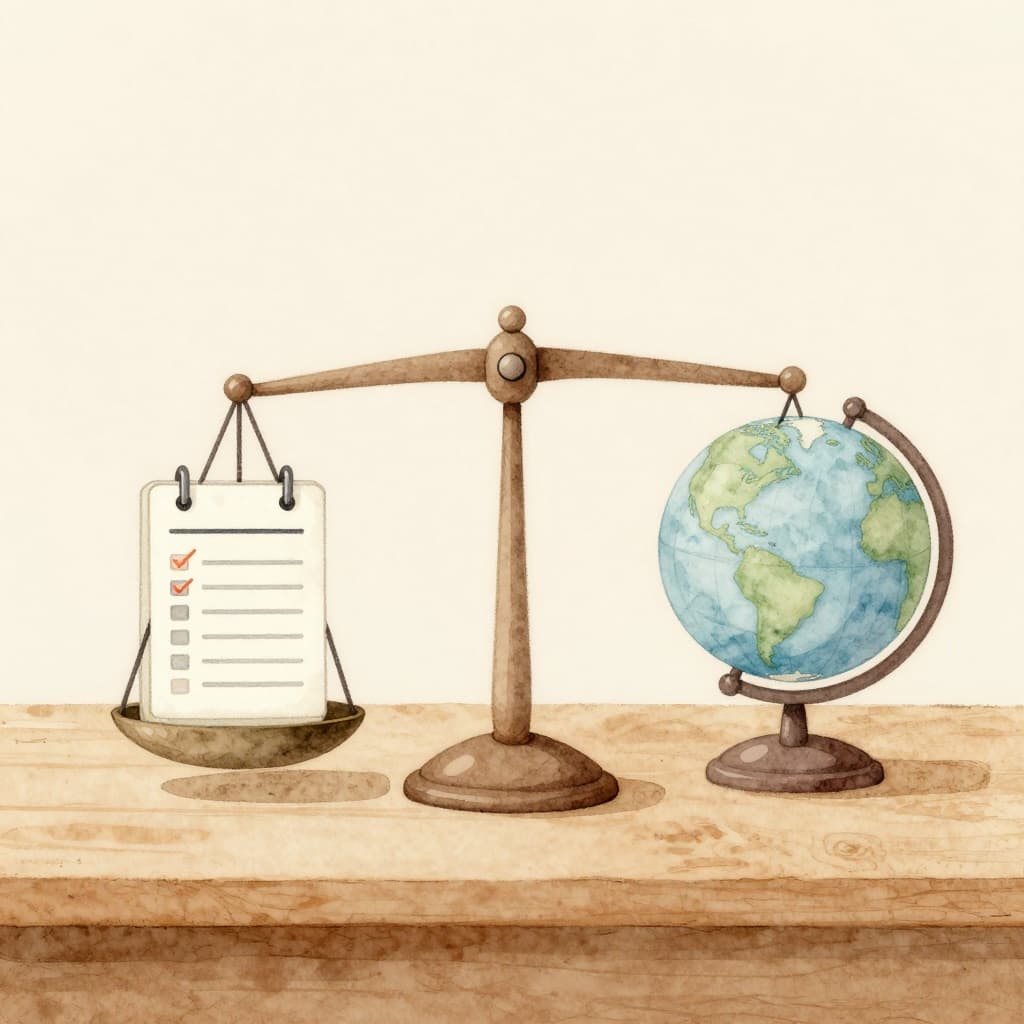
If you rely only on short-term forecasts, you’ll feel busy but still drift. If you rely only on long-term forecasts, you’ll sound confident but miss near-term reality.
Short-term forecasting keeps you aligned with current conditions. Long-term forecasting keeps you aligned with your direction.
That combination is where most organizations win. It also helps you respond when conditions shift.
For example, long-term forecasts might suggest steady growth, so you start planning capacity. Then short-term forecasts tell you when demand spikes or slows. You adjust while keeping the bigger plan intact.
Overcoming Challenges in Short-Term Forecasting
Short-term forecasts face their own traps.
First, they can look “wrong” when surprise events hit. Power outages, sudden policy shifts, or unexpected weather extremes can invalidate near-term plans.
Second, short-term models can overreact to noise. Sometimes recent data reflects one-off events rather than true demand. So your forecast follows the noise instead of the signal.
To reduce those issues, you can:
- update forecasts on a regular schedule
- track what changed since the last forecast
- keep a short “assumption log” for key inputs
This way, if a forecast misses, you can see why. Then you can improve without guesswork.
Navigating Long-Term Uncertainties
Long-term forecasts struggle because the future grows wider, faster.
Big risks include:
- policy changes (taxes, regulation, trade)
- tech shifts that reshape customer needs
- market structure changes (new competitors, pricing models)
- unexpected shocks that alter growth paths
Because of that, long-term forecasts should drive strategy, not micromanagement. They work best when you turn them into decisions like “what to build next” and “how to size risk.”
A practical approach is to use ranges and scenarios. Then, choose plans that still work if the forecast lands in the higher or lower band.
That doesn’t guarantee success. But it keeps you from betting the farm on a single outcome.
Long-term thinking also benefits from regular re-checks. When the world changes, your forecast should change too.
Conclusion
Short-term vs long-term forecasts differ most in one place: time horizon. Short-term forecasts answer near decisions, often within days or weeks, and they usually stay more accurate. Long-term forecasts look months to years ahead, and they guide strategy with ranges and scenarios, not exact predictions.
Accuracy follows the same pattern. With short horizons, fewer surprises arrive, and errors have less time to compound. With long horizons, uncertainty grows, so precision drops.
Finally, the data and tools differ. Short-term forecasting leans on real-time signals and frequent updates. Long-term forecasting leans on history, broader trends, and structured assumptions.
The best planning comes from using both. Short-term helps you act today, and long-term helps you choose what to build next.
When you’re planning your next move, which horizon matters most for your current decision?